Sunday, June 13, 2010

USHERING IN THE MODERN WORLD


A review of Jean Edward Smith’s FDR (2007)

(Rating 5 of 5)

Franklin D. Roosevelt was the most important person of the twentieth century, he helped the United States shake off bonds of the nineteenth century and prepared the nation to accept it's new role as a global superpower. When he came to power of March 4, 1933 after the stunning November 1932 election, the nation was at its weakest point since the dark days of the Civil War. The nation had been crippled by the devastation of the 1929 crash, and a man, who was himself disabled, was going to show the nation how to stand. Smith tells an incredible story of a remarkable human being.

Franklin D. Roosevelt was born to extreme privilege. Smith explains that both his families, the Roosevelts and the Delanoes, were extremely rich. He was the only child of his mother (Sara Delano Roosevelt) but he was his father’s (James Roosevelt) second son. However, his older half brother, James R. Roosevelt, was the same age as Franklin’s mother so, Franklin grew up as an only child of a rich household. Smith illustrates that Roosevelt’s parents disagreed on what to name him. Each parent wanted to name him after his or her respective father. Since Sara could not stand Isaac—the name of James’s father--, they settled on naming him after her father, Warren Delano. However, when Sara’s nephew who was also named Warren died, they decided instead to name him after Sara’s favorite uncle, the childless Franklin Delano. Uncle Franklin was also very wealthy and without an heir, which caused some suspicion of Sara’s motives.


(A young FDR and his parents)

His distant cousin, Theodore Roosevelt, the Rough Rider president who most historians call the ‘first modern president’, inspired a young Roosevelt to take up a public career of his own. He would even court and wed the President’s niece Anne Eleanor Roosevelt*. Known as ‘Eleanor’ at this stage of her life she very simple minded with very little hint that she would one day evolve into one of the most important women in human history. Both in the beginning lack that passion that would one day make them great. FDR was building a career for a career’s sake and any good he did during this period was simply to further his ambition**. He would serve in the New York State Senate, and later, for President Wilson, he served as the Assistant Secretary of the Navy and earned the Democratic Party’s Vice Presidential nomination in 1920.

“Franklin was little liked in Albany. Most of his colleagues found him insufferable. Al Smith wrote him off as a dilettante—‘a damn fool’ who thought more about political appearances than substantive legislation. Robert Wagner saw him as a stage dandy interested only in publicity: ‘Senator Roosevelt has gained his point. What he wants is a headline in the newspapers. Let us proceed to our business.’ The elderly Tom Grady, who had served in the legislature with TR, thought Franklin the more obnoxious of the two. Even the genial Tim Sullivan, a man of exceptional warmth and kindness, believed him to be ‘an awful arrogant fellow.’ p.79


(President Theodore Roosevelt FDR's cousin and idol)


(Young Eleanor)


(Running for V.P.)

Then in 1921, FDR would face the greatest challenge of his life, his body stricken with what most believed to be polio, a man who had been a his peek physically was stricken down and for the rest of his life he would be deprived of practical use of his legs. He would have to go through the greatest test of his character and to answer it he would go to Warm Springs. At Warm Springs he heal enough, more mentally then physically, to challenge the world again, and this time with a real purpose to help those far worse off then him.

“For FDR, Warm Springs offered the opportunity to be in complete change of a significant undertaking—a means a reestablishing his self-esteem. Warm Springs would be his alone, a haven much like Val-Kill was for Eleanor: a place where he could do as he pleased, when he pleased, free from the formality of Hyde Park and East Sixty-fifth Street. More to the point, it provided an opportunity to participate in the fight against polio. Roosevelt had no special training in physiotherapy, but he became an authentic pioneer in its application.” p.216


The start of Roosevelt’s return to political life began in 1924 when he gave the nominating address at the Democratic National Convention; he would do so again in 1928. In addition, in 1928, he received the Democratic Party’s nomination for Governor of New York State. He would win the governorship while Herbert Hoover crushed Roosevelt’s predecessor, Al Smith, in the general election. As Governor, he began by cleaning out some the corruption by creating the New York Public Services Commission. When the depression hit, the Governor took action creating a New York relief system that would be the preview of the Federal Emergency Relief Legislation. With Frances Perkins appointed to the position of Secretary of Labor the administration was able to pass a series of Labor Reform laws protecting workers from abuse.

Hoover tried to have Roosevelt unseated in the 1930 but that effort failed and Roosevelt became the Democrats nominee for President in 1932. Roosevelt broke tradition and accepted the presidential nomination in person, he would go on to defeat Hoover in the election and become our thirty-second president. At his inauguration President Roosevelt, would challenge the nation letting them know that the only they had to fear: was fear itself.


As President, Roosevelt would dive into action. He had his legendary first 100 days passing all sorts of legislation to deal with the crisis. The President had brought Harry Hopkins and Frances Perkins with him from New York State to the national government to head up the commerce and labor departments. The New Deal would be revolutionary government action for good that would help the average person in incredibly horrible times, and put a huge dent in the Great Depression.

“By almost any measure the economic surge since 1932 had been remarkable. National income had risen by more then 50 percent, 6 million new jobs had been created, and unemployment had dropped by more than a third. OF the 8 million still unemployed, more than 70 percent worked at least part of the year for the WPA or were enrolled in the CCC. Industrial production had doubled, stock prices were up 80 percent from their 1933 lows, farmers’ cash income—which had fallen below $4 billion in 1932—rose to almost $7 billion in 1935, and corporate profits, deep in negative territory when Roosevelt took office, had zoomed to nearly $6 billion.” p.360-1


(FDR as President)


(Eleanor, as First Lady, would not only be an important advisor to her husband; but would often be the eyes and ears of the administration, traveling where the President could not.)


(FDR at work)


(Harry Hopkins, Secretary of Commerce, Head of the W.P.A)


(Frances Perkins, Secretary of Labor)

The same year Roosevelt became the President of the United States, Adolf Hitler had risen to power in Germany and was repairing and rearming his state at the same time Roosevelt was instituting the New Deal. When World War II started, isolationist feelings were still strong and popular opinion blamed the Great Depression on World War I. President Roosevelt would create an ‘Arsenal of Democracy’ to aid the allies in their fight against Hitler’s Germany. Due to world events, President Roosevelt decided to seek a third term as president, something no incumbent had ever tried. He succeeded and continued to try to help the allies then when the United States was attacked by Japan on December 7, 1941, Roosevelt asked Congress to declare war and they complied.


World War II was a war the entire country followed and was involved. Unlike modern wars, which require little to no sacrifice from the civilian population, World War II required a huge home front involvement. Roosevelt would keep the public up to date with his wartime ‘fire-side chats.’ The United States was fighting a two-front war, the Atlantic and the Pacific. Roosevelt had General MacArthur in command of the Pacific Front, General Eisenhower in Europe, and General George Marshall directing everything militarily stateside. In addition, President Roosevelt had Admirals Nimitz and King providing the military leadership for the Navy.

“In retrospect, the establishment of the command structure to the fight the war was an unprecedented achievement that reflected the extraordinary ability of Churchill and Roosevelt to saw off minor differences and find common ground. Roosevelt, unlike Lincoln, was also well served by this long familiarity with the Army and Navy and his ability to pick effective military subordinates. Leahy, Marshall, King, and Arnold were exactly the right men for the job, and they served in their posts throughout the war. In their own way they were ruthless taskmasters, loyal to the president, and, when pushed by FDR, worked effectively with the British counterparts.” p.546


(FDR communicating with the American Public)


(The three Axis Leaders)

Although from his greatest triumph also comes his greatest failure. He allowed fear and superstition in the country and inside the administration to lead to the horrible internment of the Japanese living in the United States, regardless of citizenship status. Although Smith goes into explaining how the push for this came from the bottom up, and Roosevelt himself did not originally seek it, as Roosevelt’s successor would later state, ‘the buck stops here’ and responsibility ultimately lays with the president.

President Roosevelt also forged relationships with other world leaders the most famous being Winston Churchill. Roosevelt and Churchill started to get along even before America entered the war; Churchill would even state before the House of Commons that the world depended on the American election in 1940. Smith writes about Roosevelt and Churchill’s bond was as being extremely close.

Roosevelt relationship with the other member of the ‘Big Three,’ Joseph Stalin, was probably the more interesting. Although, it somewhat damaged his reputation because of the ‘Yalta Myth***‘ Roosevelt was able to get along better with man he nicknamed ‘Uncle Joe’ much better then Churchill was able to, and often Roosevelt would act as the glue of the alliance****.

“At one point Stalin wryly suggested that 50,000 officers of the German general staff should be summarily executed at the end of the war. Bohlen saw that Stalin was smiling sardonically as he spoke, and so did FDR. ‘Not fifty thousand, but perhaps forty-nine thousand,” the president shot back. Churchill was not amused. He did not perceive that Stalin was goading him and rose to the bait. Britain would never tolerate such an outrage, he passionately responded. ‘I would be rather taken out in the garden here and be shot myself rather then sully my own and my country’s honor by such infamy.’” p.590


(The Big Three)

This book is an incredible work by Jean Edward Smith; it is just as good as his work on President Grant. Smith has a brilliant narrative that holds the reader’s attention and does justice to his subject. For the reader, Roosevelt figuratively comes back to life as the story of his life is laid out before them.

*Although this sounds gross, they were actually just fifth cousins so practically unrelated.

**There is some exception to this; he did fight for baby bottle safety after the death of his son FDR, Jr. (He later had another son named FDR, Jr.)

***The myth is that Stalin swindled sick Roosevelt at the Yalta Conference. Churchill would later point out that if Yalta was so good for Stalin, why did soon break it?

****A good comparison maybe with Roosevelt’s role in the alliance is with Julius Caesar’s role in the First Triumvirate.

{First Video is from the HBO movie Warm Springs, the second and third is from C-span}


Saturday, June 12, 2010

WELCOME TO THE 1860s…


A review of Michael Knox Beran’s Forge of Empires—1861-1871—Three Revolutionary Statesmen and the World They Made (2007)

(Rating 5 of 5)

Once on a Star Trek documentary I heard Leonard Nimoy discuss an old Chinese curse, ‘may you live in interesting times.’ In that documentary, Nimoy is referring to the 1960s. However, this book talks about times that may have been far more interesting, the 1860s. Often, we in the United States are so obsessed and fascinated with ourselves that we forget the rest of the world exists. Which is why are sports champions are always titled the ‘World Champions’ despite the fact that they are just playing in the United States*. I, myself, am certainly guilty of this. I often mark book reviews on historical events outside the United States with the labels ‘World History’ and ‘Western Civilization’ and inside the United States is labeled just ‘U.S. History.’ The U.S. Civil War has been a source of fascination for us ever since it ended, but often we ignore the wider world that our conflict played out. Moreover, we should not ignore it, for foreign affairs is a big part of why that conflict played out the way it did.

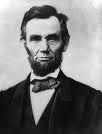
David Donald’s Lincoln played out the life of one man, Doris Goodwin’s book showed an administration, but Michael Beran’s book gives us the world that was. The focus is on the three legendary statesmen: Abraham Lincoln, President of the United States; Otto Von Bismarck, Prime Minster of Prussia and then Chancellor of Germany; and Tsar Alexander II, Emperor of Russia. Lincoln would hold his nation together that was being torn apart by the Civil War and would succeed in eradicating slavery from the Union. Bismarck would unify his county into a single nation, and Tsar Alexander sought to modernize his nation by liberating his nation’s serfs and providing for a constitutional monarchy.


(President Abraham Lincoln)


(Otto Von Bismarck)


(Tsar Alexander II)

Of the three leaders, only Lincoln would succeed in every way possible. Bismarck would unify Germany but he was always dependent on the patronage of his sovereign for unlike Lincoln, who served in a Republic, Bismarck served a King who he transformed into an Emperor. Bismarck would live to see a new Emperor come to the throne had he built and begin a process to ruin it all. Tsar Alexander was an emperor already, and in theory absolute. Unfortunately, after the centuries of serfdom, transforming the entire nation’s population from serfs to citizens would take some doing and when undermined by both conservative and radical elements it would become impossible.


Tsar Alexander was just following example that other monarchs, and Bismarck, were making with ‘Tory Democracy.’ For the monarchs and aristocrats of the mid-nineteenth century were a far more cleaver breed then their late eighteenth century counterparts. They would embrace popular reform as way of maintaining their hold on power.

“The free-state men were every day becoming more impatient with his rule. He imposed a censorship on the press; but this, he knew, was a shopworn tactic, and only strengthened the opposition. He must try something else. He had been intrigued by the way in which Europe’s craftiest politicians used (or proposed to use) the power of the lower orders against the liberal middle—against the bourgeois and professional classes. In France, Napoleon III organized mass plebiscites to ratify his power. In England, Benjamin Disraeli envisioned a union between the common people and the aristocracy, and alliance which Winston Churchill’s father, Lord Randolph Churchill, was later to christen ‘Tory Democracy.’ Others called it ‘neofeudal paternalism’ or ‘English Tory Socialism.’

It was and ingenious strategy. Use democratic paternalism to subvert the institutions of freedom. Today, when democracy and liberty are practically synonymous, such a policy seems paradoxical. But it did not seem so in the nineteenth century. In England and the United States, the rule of law, bills of rights, independent judiciaries, and legislative control of the purse and the army developed before the advent of universal suffrage. When, during the nineteenth century, democracy grew up in England and America, the institutions of the free state were relatively stable; the broader franchise did not destroy free constitutions, it made them stronger. But in countries without such stable constitutions, it made them stronger. But in countries without such stable constitutions, unscrupulous leaders used democratic instruments—plebiscites and manhood suffrage—to subvert fledgling institutions of freedom.” p.175


This book also connects the dots on how these events all tied into each other. Generally, I and most other historians both professionals, and us amateurs, are aware of the British and French support for the Confederacy during the U.S Civil War. However, I do not believe that most are equally aware of the Prussian and Russian support for the Union. Bismarck could not support the South since he was trying to unify his own nation, and Alexander equally supported the Union in his outright refusal even to consider recognizing the Confederacy. This book also gives detail on how the United States, angry at the French for their support of the Confederacy, was able to play a role in the Franco-Prussian War.

“The advice of Philip Sheridan, General Grant’s cavalry master, made a deep impression upon him. Sheridan had come to the Prussian camp as an observer. He urged the Germans to embrace the policy of total war to which Lincoln and Grant had been driven to during the Civil War. ‘The proper strategy,’ Sheridan told Bismarck over dinner at Rheims, ‘consists in the first place of inflicting as telling blows as possible on the enemy’s army, and then in causing the inhabitants so much suffering that they must long for peace, and force their Government to demand it. The people must be left with nothing but their eyes to weep with over the war…’ ‘You know how to hit an enemy as no other army does, but you have not learned how to annihilate him. One must see more smoke of burning villages, otherwise you will not finish the French.’” (p.353)


(General Philip Sheridan)

This book opens a window into another time, one that sees all these dramatic events and actors great and small take part. The History Channel should a documentary based on it. For, I found this book more entertaining than a movie. This book has a brilliant narrative and I highly recommend to anyone.

*Now granted the amount of foreign player in our pro leagues might give those titles more legitimacy but we have always had those titles.

{Video was produced by the History Channel special Russia Land of the Tsars}

Tuesday, June 8, 2010

Some People Seek Greatness Others Have it Thrust Upon Them


A review of Jean Edward Smith’s Grant (2001)

(Rating 5 of 5)

All he really wanted to be was a mathematics professor. Had the life plan Ulysses S. Grant made while at West Point came true, the world would have never heard of the man who would become our eighteenth president. Moreover, the whole world would have been worse place then it is today. Grant’s life is in itself a remarkable story that sparks an interest form the curious: a compassionate man who becomes one of world’s most feared generals.

Smith brings to life an incredible Grant, one who is so easy going that when his name was published wrong at West Point, instead of ‘Hiram Ulysses Grant’, he was listed as ‘Ulysses S. Grant’; the young cadet just accepts the change. A young solider in the Mexican War, he finds himself in a conflict he cannot stand. Separated from his young family, he takes to drinking and is forced to resign. His life hits rock bottom he tries to peddle wood to and takes up odd jobs to try to support his family. At one point, his wife’s family gives him a slave, which forces Grant to confront an issue that he never really thought about.

“The circumstances are not clear, but sometime during his last year at White Haven he acquired possession of the young slave Colonel Dent left behind, a thirty-five-year-old man named William Jones. Grant’s views on slavery were ambivalent and Jones was the only slave he ever owned. When he moved to St. Louis, Grant was initially tempted to rent the man out, but soon decided against it. On March 29, 1859, he went to circuit court and filed the manumission papers to emancipate Jones. Grant never discussed his motives, but the action speaks for itself. Able-bodied slaves sold for a thousand dollars or more, and Grant surely could have used the money. Instead, he set Jones free.” p.94


When the War breaks out, Grant joins the forces of the Union. He receives a position as a colonel of volunteers; he is quickly promoted to brigadier general of volunteers and begins to win battle after battle. General Grant at first is unpopular at home because of casualties, but he has the important support of President Lincoln, soon he becomes popular all over the north as he keeps piling up victories in the western front. He earns himself the rank of major general in the permanent army—the highest rank at the time—and is brought back to Washington to be granted the new rank of Lieutenant General, be given supreme command of the Army, and personal oversight of the Eastern front. Grant would defeat General Lee and win the Civil War.


(Grant as three star general)


(Interesting point about Lee, as a Confederate officer he wore the uniform designed for a colonel, because that was the highest rank he held in the Union Army, and would not wear a general's uniform until the South had won, which they never did.)

“The generals greeted each other cordially. Grant took a chair in the middle of the room and Lee resumed his seat by an unlit fire, while Marshall remained standing beside him. ‘What General Lee’s feelings were I do not know,’ Grant said later. ‘As he was a man of much dignity, with an impassive face, it was impossible to say whether he felt inwardly glad that the end had finally come, or felt sad over the result, and was too manly to show it. What ever his feelings, they were entirely concealed from my observation; but my own feelings, which had been quite jubilant on the receipt of his letter, were sad and depressed. I felt like anything rather than rejoicing at the downfall of a foe that had felt so long and so valiantly.’ The two men chatted easily for a few minutes, recalling the time the met in Mexico, after which Babcock ushered in Sheridan, Ord, and Rawlins, as well as a number of other Union officers. The newcomers arranged themselves behind Grant as quietly as swords and spurs would permit. Grant made no reference to their coming. Lee showed no resentment at their presence.” p.404


(Famous scene that ends the bloodiest war in American history.)

After the war, Grant played an important part during the accidental and terrible Johnson administration that was created in the wake of President Lincoln’s assassination. Grant often acts as the cool head in the conflict between President Johnson and the Congress. In 1868, the same year he was created the army’s first four-star general, he became the Republican candidate for president.


(One the worst, if not the worst president)


(Grant as president)

Smith makes a compelling case that Grant’s presidency that is generally considered to be one of the worst, should in fact, be considered one of the best. Smith points out that it was Grant’s presidency that gave us the inter-continental railroad, brought a swift end to the first Ku Klux Klan, and created a Civil Service Commission that would be a forerunner to the Civil Service that was created in during the presidency of Chester A. Arthur.

“To the end of his life Grant viewed his veto of the inflation bill, together with passage of the Resumption Act, as the most important accomplishment of his administration. The introduction of a stable currency paved the way for the enormous growth of the American economy in the last quarter of the nineteenth century—just as currency reform in Germany and Japan precipitated their extraordinary economic revival after World War II. Inflation was tamed, speculation reined in, and the credit of the government firmly reestablished. By the century’s end, the American dollar had become the international symbol of financial stability. Grant’s veto of the inflation bill also marked a political benchmark. From 1874 onward, the Republican party became the party of economic conservatism, fiscal restraint, and a sound dollar. The Resumption Act was not only a pivotal event in restoring the American economy, it also marked a fundamental redefinition of the nation’s political parties. Grant imparted to the Grand Old Party a commercial, pro-capitalist stance that replaced emancipation as the party’s raison d’etre.” p.582


Grant’s post-presidency was also an adventure itself. He world go on a trip that led him to meeting people such as Queen Victoria, Otto Von Bismarck, Tsar Alexander II, and Emperor Meiji of Japan. He returned and tried to claim the presidency once more but failed to win the nomination. That loss would be a blessing because in that presidential term Grant developed throat cancer, and would spend the rest of his life writing his memoirs.

(Grant on his post-presidential world tour)


(Queen Victoria)


(Otto Von Bismarck)


(Tsar Alexander II)


(Emperor Meiji)

I highly recommend this excellent book. Jean Edward Smith has a masterpiece here it is very intimate portrayal of our eighteenth president. No one who reads this will be disappointed.

{Video posted by randytandy23 on YouTube}

Sunday, June 6, 2010

A COMMON MAN AND A GREAT HISTORICAL FIGURE


A review of the Personnel Memoirs of U.S. Grant (1885, original edition) (2001, my copy)

(Rating 5 of 5)

Ulysses S. Grant is one of the most famous figures in American history. He was the Union general who had successfully led the nation’s troops to victory in the Civil War. Grant wrote these memories while dying and trying to provide an income for his wife. Mark Twain, who was his publisher and is not exactly unbiased, compared the work to that of Julius Caesar. Well having read and reviewed Caesar, I have to say that I disagree, I like Grant’s work a lot more then I liked Caesar. As my title suggests I found Grant, for a great and historic figure, to be a man very down to earth. Grant’s writing is easy to read and understand. As a reader, I had an easy time identifying with a man who died ninety-six years before I was born.


(Dying Grant writing his memoirs)

Grant begins in this introduction explaining why he is writing these memoirs, mainly his money problems and he discusses how sick he has been. He explains how his sons have helped verify certain facts for him, while working on these volumes. Most touchingly, he states that his intention is just to tell his side and not to make light of anyone else’s service during the war.

“In preparing these volumes for the public, I have entered upon the task with the sincere desire to avoid doing injustice to any one, whether on the National or Confederate side, other then the unavoidable injustice of not making mention often where special mention is due. There must be many errors of omission in this work, because the subject is too large to treated of in two volumes in such way as to do justice to all the officers engaged. There were thousands of instances, during the rebellion, or individual, company, regimental and brigade deeds of heroism which deserve special mention and are not here alluded to. The troops engaged in them will have to look to the detailed reports of their individual commanders for the full history of those deeds.” p. xxxv


The book begins with him discussing his ancestry, stories about his boyhood, and life at West Point. Grant did not like West Point at first, although that his attitude changed as time went on. West Point was also the reason he went from being Hiram Ulysses Grant to Ulysses S. Grant*.


(Young Grant all dressed up)

Grant also tells the tale of wearing his full dress uniform around town, after graduation, and having everyone laugh at him. That story is a bit of comic relief that leads up to the Mexican War. Grant throughout his entire life would have incredibly strong feelings about that conflict.

“For myself, I was bitterly opposed to the measure, and to this day regard the war which resulted as one of the most unjust ever waged by a stronger against a weaker nation. It was an instance of a republic following the bad example of European monarchies, in not considering justice in their desire to acquire additional territory.” p. 22-3

“It is a credit to the American nation, however, that after conquering Mexico, and while practically holding the country in our possession, so that we could have retained the whole of it, or made any terms we chose, we paid a round some for the additional territory taken; more then it was worth, or likely to be, to Mexico. To us it was an empire of incalculable value; but it might have been obtained by other means. The Southern rebellion was largely an outgrowth of the Mexican war. Nations, like individuals, are punished for their transgressions. We go our punishment in the most sanguinary and expensive war of modern times.” p.23-4


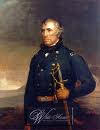
Nevertheless the conflict affected him in many ways, not only did he learn a lot about war that they cannot teach in school, he also found a role model in Major General Zachary Taylor. Grant admired him because he felt that even though he was the commanding general, his feelings on the war were the same as his. Grant would copy his attitude and concepts on military matters.


(Taylor was Grant's role model)

Hard times would fall on him he would resign from the Army, according to him, because he could not make a living of Army pay. Grant would struggle to support himself and his family. He would peddle wood, work for his father and many other things. Destiny would call to him however when the Civil War broke out.

As an officer of some experience, Grant was able to rejoin the Army as volunteer Colonel, and would quickly see a star. On the Western Front, Grant would achieve victory after victory. He would gain ground for the Union, promotions for himself, and the attention of President Abraham Lincoln.


(Lincoln was Grant strongest supporter)


(Grant as general)

In one of my reviews of Caesar, I pointed out my lack of understanding of military tactics. So, some of the best stuff in this book, for me, is not discussion of strategy but rather some of the more human moments of the work. Such as, when Grant finds himself confronted with a confederate bureaucrat after a victorious battle.

“The complainant said that he wanted the papers restored to him which had been surrendered to the provost-marshal under protest; he was a lawyer, and before the establishment of the ‘Confederate States Government’ had been the attorney for a number of large business houses at the North; that ‘his government’ had confiscated all debts due ‘alien enemies,’ and appointed commissioners, or officers, to collect such debts and pay them over to the ‘government’; but in his case, owing to his high standing, he had been permitted to hold these claims for collection, the responsible officials knowing that he would account to the ‘government’ for every dollar received. He said that his ‘government’, when it came in possession of all its territory, would hold him personally responsible for the claims he had surrendered to the provost-marshal. His impudence was so sublime that I was rather amused than indignant. I told him, however, that if he would remain in Memphis I did not believe the Confederate government would ever molest him. He left, no doubt, as much amazed at my assurance as I was at the brazenness of his request.” p. 203-4


I thought a more interesting aspect was his overview of the social political situation of the Civil War. He did not think the Founders themselves would disallow states leaving in the beginning but as soon as the union began admitting other states, that right ceased to exist. I do not think that is the most intellectual argument but it is the one that worked for him. Where Grant really is insightful was his conclusion that the South benefited from losing in the Civil War.

“There was no time during the rebellion when I did not think, and often say, that the South was more to be benefited by its defeat than the North. The latter had the people, the institutions, and the territory to make a great and prosperous nation. The former was burdened with an institution abhorrent to all civilized people not brought up under it, and one which degraded labor, kept it in ignorance, and enervated the governing class. With the outside at war with this institution, they could not have extended their territory. The labor of the country was not skilled, nor allowed to become so. The whites could not toil without becoming degraded, and those who did were denominated ‘poor white trash.’ The system of labor would have exhausted the soil and left the people poor. The non-slaveholders would have left the country, and the small slaveholder must have sold out to his more fortunate neighbor. Soon the slaves would have outnumbered the masters, and, not being in sympathy with them, would have risen in their might and exterminated them. The war was expensive to the South as well as to the North, both in blood and treasure, but it was well worth the cost.” p.319


Grant’s story is not entirely complete; he does not talk about equivalent detail what went on after the war as he did during it. His mention of his own presidency is only in passing, and he does not discuss receiving the four star commission in 1868. It is quite possible that he meant to discuss these things but illness got the better of him and he cut it short. Or maybe those end years were not very pleasant for President Grant and therefore he chose not to go into them in much detail. Nevertheless, President Grant’s book is worthy of all the praise that it receives, and I recommend this work more then any other from this time period. I find most Victorian Age works to be too ‘stuffy’ to read but this work is written from a common man’s perspective on great events.

*Grant had always gone by his middle name, so the Congressman that appointed him, thinking Ulysses was his first name, tried to guess what his middle initial was. He guessed it was 'S' for ‘Simpson.’

{Video was posted on youtube by PlanoProf}

Saturday, June 5, 2010

MY ENEMY, MY ALLY


A review of Doris Kearns Goodwin’s Team of Rivals: The Political Genius of Abraham Lincoln (2005)

(Rating 5 of 5)


I was actually reading this book during the 2008 presidential primaries; I was a supporter of then-Senator Barack Obama. I could not help but notice some of the similarities of a tall skinny lawyer with little Washington experience running against a more seasoned senator from New York in Hilary Clinton. Later as the future president won the nomination, it turned out that he had read this book as well and had mentioned it to the press. When he was elected over John McCain in November, he would take Senator Clinton on as his new secretary of state.

David Herbert Donald in his famous Lincoln biography gave us an intimate look into Abraham Lincoln the man. In this Pulitzer Prize winning work, Goodwin elegantly describes the inner working of the Lincoln Administration. The Lincoln presidency was the most accomplished on record. The Polk administration was the only presidency that accomplished all that it set out to do at the start, but Lincoln’s accomplished far more than even they could have dreamed in the beginning. Not only would the nation be saved from being torn in half but also slavery itself would be eradicated in all legal form from the nation forever.

Although Goodwin’s work focuses mostly on the team and its players, she also discusses how their families also played an important part. The team was as follows:


· Abraham Lincoln, the President. The clear but not undisputed leader of the group, the president came out of nowhere to capture the Republican Nomination from men far greater experience. Only a former one-term congressman, Lincoln managed to win the nomination and ultimately the presidency. He would assemble and lead his Cabinet through the darkest times in our nation’s history.


· William H. Seward, Secretary of State. Lincoln’s number two, who was considered the front-runner going into 1860 Republican convention. Seward was the Senator and former Governor of the State of New York. Senator Seward had the most delegates going into the convention, but lost out to Lincoln. This was a good thing considering Seward’s bright idea to stop the Civil War was to declare war on England. Although that bullet was dodged, he did serve as an able to Secretary of State to President Lincoln and the nation.


· Salmon P. Chase, Secretary of the Treasury. Secretary Chase was Lincoln’s chief rival in the cabinet but an effective Secretary of the Treasury. Chase had been the sitting Governor and former Senator of the State of Ohio going into the convention. He was a devote Christian, a die-hard abolitionist, and an ambitious politician. Although an ambitious politician, he was not as skilled as Lincoln.


· Edward Bates, Attorney General. A conservative family man who is the senior statesman of Lincoln’s team of rivals, he would be the person involved with many of the legal aspects of the administration. He and Lincoln were the representatives of the old Whig party in the cabinet.


· Edwin M. Stanton, Secretary of War. Taking over for the most incompetent Simon Cameron, Stanton was the ‘tough guy’ of the administration, considering most popular politicians, as a habit, have a tough time saying ‘no’—Lincoln would make fun of himself for this—Stanton would be that back bone that could tell people things they did not want to hear.

“In fact, as John Nicolay later wrote, Lincoln’s ‘first decision was one of great courage and self-reliance.’ Each of his rivals was ‘sure to feel that the wrong man had been nominated.’ A less confident man might have surrounded himself with personal supporters who would never question his authority. James Buchanan, for example, had deliberately chosen men who thought as he did. Buchanan believed, Allan Nevins writes, that a president ‘who tried to conciliate opposing elements by placing determined agents of each in his official family would find that he had simply strengthened discord, and had depended party divisions.’ While it was possible that his team of rivals would devour one another, Lincoln determined that ‘he must risk the dangers of faction to overcome the dangers of rebellion.” p.318-9


In addition, to the ‘team’ itself Goodwin also discusses their family life and some of the people who helped drive them. Some of these were:


· Mary Todd Lincoln, the First Lady. Born to a Southern family, the election of 1860 could have been described as a battle between all of her old boyfriends. Mrs. Lincoln is vilified often by the Northern press as being to pro-Southern, while her husband leads a war that her brothers are fighting in, but on the other side.


· Frances Seward, wife of Secretary Seward. Mrs. Seward often acted as the voice of moral reason in advising her husband. She hated slavery even more then him.


· Kate Chase, daughter of Secretary Chase. Miss Chase was every bit as ambitious as her father. Since her father is widowed and not looking to remarry, she saw herself playing the role of First Lady during her father’s presidency. She would become Mrs. Lincoln’s main rival in the Washington social circles.

“Observing Mary as she departed for her regular round of hospital visits, William Stoddard wondered why she didn’t publicize her efforts. ‘If she were worldly wise she would carry newspaper correspondents, from tow to five, of both sexes, every time she went, and she would have them take shorthand notes of what she says to the sick soldiers and of what the sick soldiers say to her.’ This, more than anything, he surmised, would ‘sweeten the contents of my many journals’ that had frequently derided the first lady’s receptions and redecorating projects. The New York Independent had been particularly relentless in its attacks on Mary. ‘While her sister-women scraped lint, sewed bandages, and put on nurses’ caps,’ Mary Clemmer Ames wrote, ‘the wife of its President spent her time in rolling to and fro between Washington and New York, intent on extravagant purchases for herself and the White House.’” p.458


Team of Rivals is history that reads like a novel. It is an exiting book about a terrible time in our nation’s history. If someone knew nothing about the Civil War, he or she would still find this book enjoyable.

{Even though 'the West Wing' was not built yet that really cool video comes from Manny535 on Youtube}

Friday, June 4, 2010

An Interesting Person on an Interesting Person


A review of Christopher Hitchens’ Thomas Jefferson: Author of America (2005)

(Rating: 4 of 5)

I have always found Christopher Hitchens to be a fascinating individual. A man who has spent time all over the political spectrum, whom I have had the pleasure to watch on Bill Maher’s Real Time. Politically speaking I do not agree with him on much of anything although I do think he is one of the greatest thinkers of our time. He was once regarded by Gore Vidal to be his heir apparent, however he (Vidal) no longer feels this is the case.

In this little 188-page biography for the Eminent Lives series, Hitchens writes about the United States of America’s third President, Thomas Jefferson. Hitchens is clearly a Jefferson fan; he took his American citizenship oath at the steps of the Jefferson Memorial. In this book, he details Thomas Jefferson’s political career from an early legislator to his time as President of the United States. He also spends one brief chapter on President Jefferson’s post-presidential years. Through out the work Hitchens tries to explain what it is that makes Thomas Jefferson so important and Revolutionary.

“Jefferson was not a man of the Enlightenment only in the ordinary sense that he believed in reason or perhaps in rationality. He was very specifically one of those who believed that human lay in education, discover, innovation, and experiment…. He studied botany, fossils, crop cycles, and animals. He made copious notes on what he saw. He designed a new kind of plow, which would cut a deeper furrow in soil exhausted by the false economy of tobacco farming. He was fascinated by the invention of air balloons, which he instantly saw might provide a new form a transport as well as a new form of warfare. He enjoyed surveying and prospecting and, when whaling became an important matter in the negotiation of a commercial treaty, wrote a treatise on the subject himself.” p.43-4


Although a romantic, Hitchens does not shy away from criticizing Jefferson if and when he feels it is necessary. He points out some of Jefferson’s hypocrisy both political and personnel. To Hitchens, Jefferson’s greatest accomplishment was his dedication to the ideal of religious freedom for all.

“So Jefferson took the same view of Haiti as he had of Virginia: the abolition of slavery could be as dangerous and evil as slavery itself. He did not, through this blinker of prejudice, at first discern that events in Haiti would one day provide him with an opportunity of historic dimensions.” p.101


This is a great little one-stop biography, even if you are not a fan of Mr. Hitchens himself that should not stop anyone from enjoying this work. Hitchens writes with whit and humor, and he makes analogies to events that have occurred long after Jefferson’s own time and before it. The book is like reading a 200-hundred page article that he has written for Vanity Fair.

{Video is from C-Span}

Thursday, June 3, 2010

For a Prince Whose Character is Thus Marked by Every Act That May Define a Tyrant… He was not such a bad guy


A review of Christopher Hibbert’s George III (1998)

(Rating: 5 of 5)

As an American citizen, I am a citizen of a very young nation. A past that stretches back only a few hundred years, unlike other nations that have national histories that go back thousands. There is some advantage to that; we can easily separate history from myth with more efficiency than some of our older brother-nations. However, it does however make our past very plain, when studying the Middle Ages the origins of our nation are on both sides of the Atlantic, but neither is really ‘us.’ Although a die-hard republican,* I have always been fascinated by the concept of monarchy. The idea of supreme power—sometimes absolute power—invested in one man or woman just by virtue of birth was always amazing to me. Occasionally children coming to the throne as small children or even infants; King Louis XIV of France was enthroned at age four and ruled for over seventy years. When I first learned of it, I wanted to know exactly how the hereditary succession worked and what all the various titles meant. Nevertheless, what I really found most interesting was how a concept of government that had lasted for over thousands of years suddenly ended.

One of the interesting facts I learned was that a good deal of these last monarchs were not solely responsible for bringing an end to their kingdoms but often they were too stupid to find a way to solve their problems. King Louis XVI**, Tsar Nicholas II, and Kaiser Wilhelm II were all stupid fools who probably did not have to lose their thrones, and, in the case of the French king and Russian emperor, their lives. Still, that ancient way of government did end, and, as a result, citizens of those nations look at monarchy as something that they use to have and is part of their past. Britain, Spain, and many other European nations still have kings and queens, although, with rare exception, they are now mostly just figureheads.

In the United States before we had our successful constitutional government, we had an unsuccessful constitutional government in the Articles of Confederation. We have no direct and apparent link to the world of kings, queens, and emperors. Yet, we were once colonies under Great Britain and other parts of the nation once belonged to Spain and Hawaii itself was once the Kingdom of Hawai’i so we do have some relationship to crowns of old. As this image from colonial Virginia stands out.


(On the top there are three images. The image in the center is of King James I of England, to his left is King James's predecessor Queen Elizabeth I, and to the King's right is his heir Charles, the Prince of Wales.(The future King Charles I))

Therefore, in a way, King George III was our last monarch and there has always been a part of me that is fascinated by the man. In the United States there are generally, five kings that we are aware of. The first is King Tut, although very few of us can say or spell his real name: Tutankhamen. The second would be King Ferdinand of Spain for being Queen Isabella’s husband and sending Christopher Columbus on his missions to the New World. The third would King Ferdinand’s son-in-law King Henry VIII, although we Americans think the number eight had something to do with the amount of wives he had—that were six, not eight—not the line of Henrys the preceded him. Generally, we know nothing about England’s other seven King Henrys. The fourth would be King James for writing the Bible and for Jamestown. Lastly, we know of King George and the American Revolution, although very few American could tell you that it was George the Third, as opposed to any of the other five Georges. Yet, he is the king who is in many ways directly responsible for who we are today, though not in a way which he would approve. Nevertheless, because of his long reign, the fate of many nations would undergo an incredible transformation. His legacy would be consistently redefined he would be lovingly called ‘Farmer George,’ angrily called a tyrant spelled out in the American Declaration of Independence, and mockingly called the ‘Mad Monarch’ due to a life time battle with mental illness.


(King Tut's death mask)

(King Ferdinand and Queen Isabella)

(King Henry VIII and his wives)

(King James I, author of the Bible.)

(King George III, who this book is about)

Hibbert captures all of this in his book. He tells the story of a very powerful but dysfunctional family in the eighteenth century British Royals. When the young prince was born his father, the Prince of Wales, and his grandfather, King George II, were not in speaking terms to state it mildly.


(King George II, grandfather)

(Prince Fredrick, the Prince of Wales, father)

Royal families, like most families, find that such dysfunction works in circles carrying down the generations. As the Prince of Wales, King George II was in consistent disagreement with King George I. When Fredrick, the Prince of Wales, dies in 1751 and new young prince—Fredrick’s son, George, was granted the traditional Prince of Wales title, the dysfunction continued. As the King, George III would prove no better a father to his heir; struggling with his son for decades as his own Prince of Wales would continue to disappoint him.


(George III as Prince of Wales)

(George, the Prince of Wales, son and successor)

“His grandfather, the King, took little interest in Prince George’s progress. He nominated him a Knight of the Garter soon after his eleventh birthday; but he did so only because he was advised that he would be harshly criticized by the Opposition for the neglect if he did not, and he seems not to have answered Prince George’s respectful and dutiful letter of thanks for the honour, merely sending it on to one of his Secretaries of State.” p.11


Hibbert describes a monarch who accepts the concept of constitutional monarchy, the king’s power having legal limits, but is determined to use the powers that are rightfully his. Growing up, he was closer to his mother and the Dowager Princess of Wales would instruct he son to ‘be a king’ not to reign but to rule. The King would rule long enough to see all that he believed in challenged both at home by Charles Fox, in his colonies by the American Revolutionaries, and across the English Channel by French Revolutionaries who deposed his hated rival King Louis XVI claiming that they would bring an end to monarchy. This would unite the monarchs of Europe like never before, King George would even go out of his way to help the Jacobite pretender, the Cardinal Henry Stuart.

“He was well aware that theoretically nothing in either the Bill of Rights of 1689 or the 1701 Act of Settlement stood in the way of his declaring war, nominating peers, appointing bishops and summoning or dissolving Parliament. But in practice he was constrained from doing so, since the Civil List Act of 1698 was intended to give the monarchy finances enough only for the Court and the civil service. It was Parliament which voted money each year for the Army and Navy and for servicing the national debt. The King, therefore, needed Parliament’s approval of his Government, and he soon came to realize that his undoubted power of appointing Ministers was qualified by the necessity of gaining parliamentary support for their measures. That requirement was not, however, such a restriction as might have been expected, since there was a widespread belief that any King’s Minister ought to be given a fair chance to prove himself and since the existence of a large ‘court party’ of office-holders in both Houses of Parliament ensured that the resignation of a First Minister was rarely brought about by parliamentary defeat.” p.76-7


However there is also a very human side to this famous king, he was in person very kind and charitable, he gave a great deal of his personnel funds to help those in need, and he could very forgiving to those had wronged him, even those who a tried to kill him.


In government, the King believed that the monarch should be beyond politics. Unfortunately, the King also felt that he should govern directly as he felt strong monarch should. Thus you have a contradiction for one cannot act in a political manner and remain apolitical***. He saw criticism of him as an attack on the state itself and any attack on the state to be an attack on him. This attitude would help drive colonists in America towards more permanent solution to their problems with Britain by declaring George a tyrant and unfit to rule them. The American Revolution broke the spirit of the old King, five years after he would have to battle to regain his senses when he lost control of his mind in 1789. He recovered but would have to battle mental illness attacks for the rest of his life.


(King George III during the American Revolution.)

King George III left a strange legacy. He was neither a bad person nor a terrible king. Nevertheless, his legacy in America is one tyranny that led to the independence of the United States; and his legacy in Britain as the ‘Mad Monarch’ would led to a tradition of the monarch being, although powerful on paper, a ceremonial figurehead who reigns but does not rule—the exact opposite of what King George wanted—and government ministers who would govern from and be responsible to the House of Commons in Parliament.

*That is republican with the little ‘r,’ politically I am a moderate left-leaning Democrat, I refer to republican as one who supports having a Republic as the best form of government.

**Technically, he was not the last king of France but essentially monarchy, as it existed, did end with his reign.

***Interestingly, the way George III viewed the monarchy is the same way George Washington view the American presidency. That is my personal view not that of the author.

{The video is from the film The Madness of King George}